
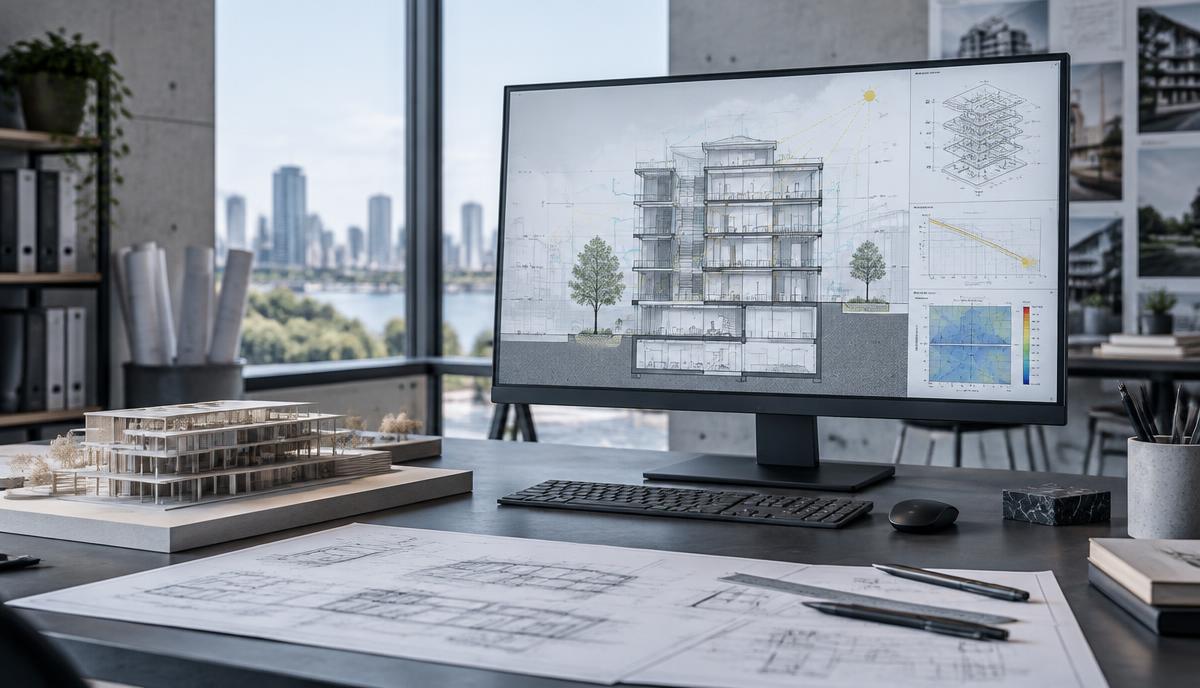
How early choices in design shape cost, performance, and long-term impact — a practical guide for architects, engineers, developers and project managers.
Sustainable construction is often discussed in broad terms — green materials, energy efficiency, certifications. For design and project teams, the real work happens in a series of practical decisions made early in the process.
These decisions influence structural systems, material use, energy performance, water management, and how easily the building can be maintained or adapted later. This article focuses on the design decisions that most reliably improve sustainability outcomes without adding unnecessary complexity or cost. It is written for architects, civil engineers, developers, and project managers who need clear, usable guidance.
Quick answer
The most effective sustainable construction outcomes come from early, practical design decisions: optimising building form and orientation, choosing efficient structural systems, reducing material waste through careful detailing, integrating passive strategies before active systems, and planning for longevity and adaptability. These choices deliver more consistent results than adding isolated “green” features late in the process.
Table of contents
- Why design decisions matter more than add-ons
- Key practical design decisions
- Decision process for project teams
- Common risks
- Practical checklist for early design stages
- Next steps
- Expert observation
- FAQ
Why design decisions matter more than add-ons
Many projects attempt to improve sustainability by specifying particular products or systems after the core design is fixed. A high-performance chiller is added, glazing is upgraded, a rainwater tank appears in a service yard. Each item is defensible on its own, yet the combined result is often expensive and underwhelming, because the building itself is still working against the intent.
Decisions made during concept and developed design stages — form, orientation, structural strategy, envelope, and spatial organisation — determine most of a building’s long-term resource use. A compact, well-oriented building with a sensible structural grid begins life with lower demand. Every later measure then has less work to do, and the same budget buys a better outcome.
There is also a coordination argument. Early decisions are cheap to change and easy to align across disciplines. The same change made after tender is a variation, a redesign, and usually a compromise. Sustainability, in practice, is largely a sequencing problem.
Key practical design decisions
1. Building form and orientation
Simple, compact forms generally use less material and lose or gain less heat than highly articulated shapes. Every additional corner, recess, and projection adds envelope area, junction detailing, and thermal bridging risk. Orientation that responds to sun path and prevailing winds supports daylighting and natural ventilation, reducing reliance on mechanical systems.
Test two or three massing options against climate at concept stage rather than assuming the first arrangement is right. The exercise takes hours, not weeks, and it frequently changes the brief in useful ways.
2. Structural system efficiency
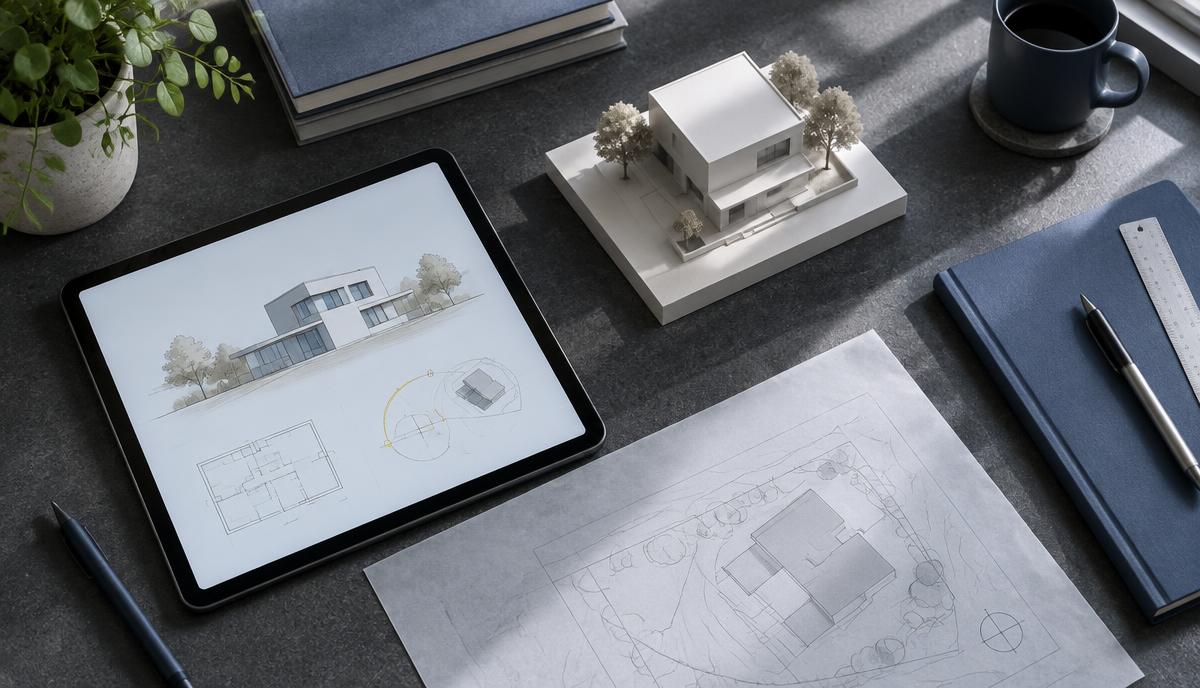
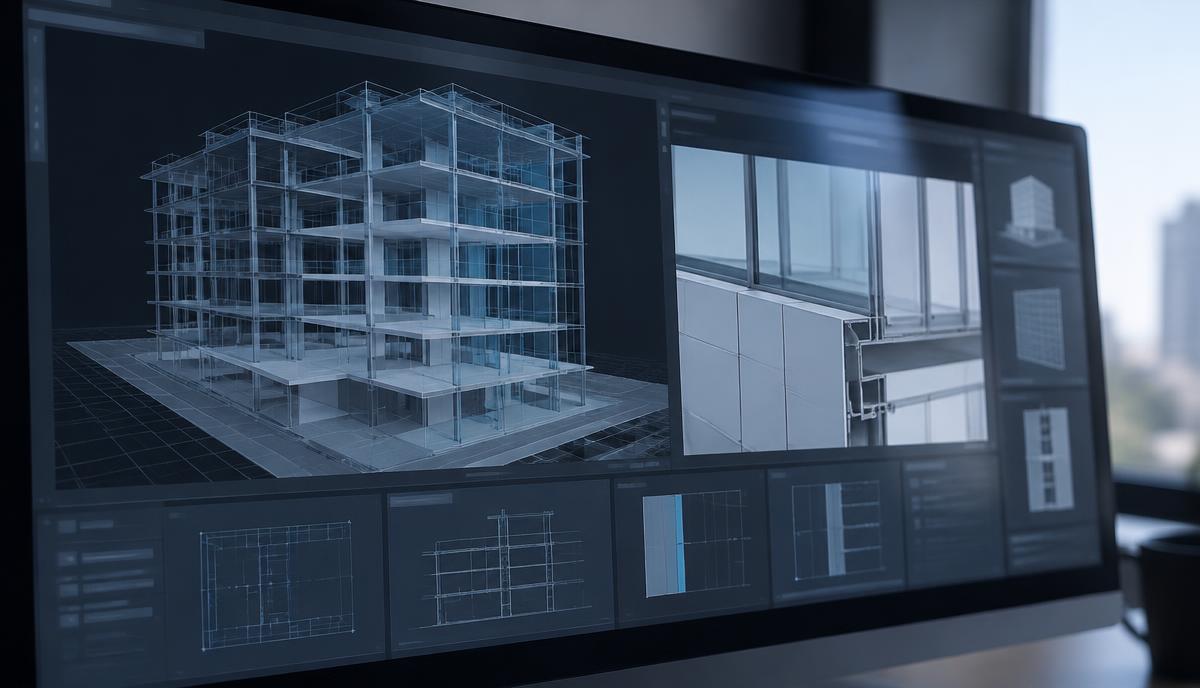
The structural system influences material quantity, construction speed, and future flexibility. Efficient grids, appropriate spans, and coordinated load paths reduce unnecessary material use. Over-designing for unlikely loads, or repeating a grid that fights the architecture, quietly increases both embodied carbon and cost.
Two habits help. First, review span choices against real usage rather than a default column spacing. Second, resolve vertical load paths and lateral stability early, so transfer structures are a deliberate choice and not a late rescue.
3. Material selection and detailing
Prioritise materials with lower embodied impact where performance requirements allow, and design details that minimise waste on site. Standardisation of elements, careful joint design, and avoidance of complex custom interfaces all contribute to leaner construction.
Detailing is where good material intent is usually lost. A specification that reads well but requires cutting, packing, and improvisation on site produces waste regardless of the product chosen. Buildability and sustainability point in the same direction more often than teams expect.
4. Envelope and passive performance
A well-considered envelope — insulation, shading, glazing ratios, and airtightness — often delivers greater operational savings than high-specification mechanical equipment alone. Passive measures should be resolved before sizing active systems, otherwise plant is sized for a problem the design could have avoided.
Shading is the clearest example in hot climates. External shading and disciplined glazing ratios reduce cooling load at source; internal blinds and better equipment only manage the consequences.
5. Water and site response
Early decisions about site drainage, permeable surfaces, rainwater capture, and landscape integration affect both environmental performance and long-term maintenance. These are difficult and expensive to retrofit later, because they involve levels, buried services, and external works that are fixed early on site.
6. Adaptability and longevity
Designing for reasonable future change — flexible internal layouts, accessible services, durable finishes — extends the useful life of the building and reduces the likelihood of premature major alterations. The most sustainable building is frequently the one that does not need to be stripped out in ten years.
Decision process for project teams
When evaluating design options, ask a consistent set of questions and record the answers:
- Does this decision reduce material or energy demand at source, or only treat the symptom?
- Is the benefit measurable and relevant to the project’s climate and use?
- Does it integrate cleanly with the structural and spatial concept, or does it fight against them?
- What are the maintenance and replacement implications over 10–20 years?
- Can the same outcome be achieved more simply?
Documenting the answers helps teams avoid decisions driven only by trend or checklist compliance, and it gives the next stage of the project a record of intent rather than a set of inherited drawings.
Where effort pays off
| Decision area | Best stage to resolve | Typical impact if delayed |
|---|---|---|
| Form and orientation | Concept | Locked-in heating, cooling and daylight penalties |
| Structural strategy | Concept to developed design | Excess material, transfer structures, cost growth |
| Envelope performance | Developed design | Oversized plant, higher running costs |
| Material selection | Developed design to technical design | Substitutions late in procurement, waste on site |
| Water and site works | Concept | Expensive rework of levels and drainage |
| Adaptability | Developed design | Early refurbishment, disruptive service upgrades |
Common risks
- Adding sustainable features after the design is fixed, leading to higher cost and compromised performance
- Focusing exclusively on operational energy while ignoring embodied impacts of materials and structure
- Over-complicating systems that facilities teams cannot maintain effectively
- Specifying novel materials or technologies without adequate local supply chain or skills support
- Treating certification targets as a substitute for clear performance thinking
Practical checklist for early design stages
- Building form and orientation tested against climate response
- Structural system reviewed for material efficiency and coordination
- Envelope strategy defined before mechanical systems are sized
- Key material choices assessed for performance, availability, and impact
- Water and site strategies integrated into the concept
- Future adaptability considered in layout and servicing
- Decisions documented with clear performance intent
Next steps
- On the next project, schedule a focused sustainability review at concept stage involving architecture, structure, and services.
- Identify the three design decisions likely to have the largest impact on material use and operational performance.
- Test alternative options for those decisions before locking the design.
- Record the chosen approach and the reasons behind it.
- Carry the same discipline into detailed design and specification.
- After completion, review what worked and what created difficulty, and feed it into the next project.
Expert observation
Sustainable construction is most successful when it is treated as a set of clear design disciplines rather than a collection of add-on products. Teams that make deliberate early decisions about form, structure, envelope, and longevity consistently achieve better outcomes — environmentally and economically — than those that rely on late-stage interventions.
About the author
Vikash Jangir specialises in civil and architectural design workflows at CoodeLoom. He supports project teams with practical structural and design coordination that balances performance, buildability, and long-term value.
Work with our design team
If your team needs help testing design options, coordinating structure and envelope, or visualising decisions before they are locked, our architecture and 3D design service is built for exactly that stage of a project.
Explore Architecture & 3D Design
FAQ
Is sustainable design more expensive?
Not inherently. Cost increases mostly come from adding features late or specifying complex systems. Decisions taken at concept stage — compact form, efficient structure, sensible glazing — often reduce both capital and running cost.
Should we focus on operational or embodied carbon?
Both, but at different stages. Structure and material choices dominate embodied impact and must be addressed early; envelope and systems govern operational performance through developed and technical design.
Do we need a certification target to design sustainably?
No. Certification can be useful for client assurance and benchmarking, but it is not a design strategy. Clear performance intent, recorded and tested, produces better buildings than checklist compliance alone.
How much time should a concept-stage sustainability review take?
For most projects, a half-day workshop with architecture, structure, and services, plus a short written record of decisions, is enough to change the trajectory of the design.
What if the client is not interested in sustainability?
Frame the decisions in terms the client already values: lower running costs, simpler maintenance, faster construction, and a building that stays useful for longer. Most of the same choices follow.
Related reading
Choose Your Reading Experience
Whether you prefer an immersive online experience or a professionally designed executive summary, we’ve made both available.
Read Online
Experience the complete interactive article with animations, architecture diagrams, comparison tables, live charts, calculators, expandable sections, and rich visual storytelling.
- Interactive Charts
- Architecture Diagrams
- Performance Visuals
- ROI Calculator
- Animated Stats
- Sticky Navigation
- Related Articles
- Search Optimized
Executive PDF
Download a beautifully designed executive report optimized for business leaders, client presentations, management meetings, and offline reading.
- Executive Summary
- Key Insights
- Business Recommendations
- Professional Charts
- Architecture Diagrams
- Comparison Tables
- Checklists
- Action Plan
- References
- Printable A4 Layout
Approx. 2–4 MB · Print-ready A4
Still prefer reading online?
Continue exploring the complete interactive experience with diagrams, calculators, FAQs, and additional resources.

Written by
Vikash Jangir
Civil & Architectural Design Specialist, CoodeLoom
Helping project teams connect architectural intent, structural coordination, and practical construction requirements.