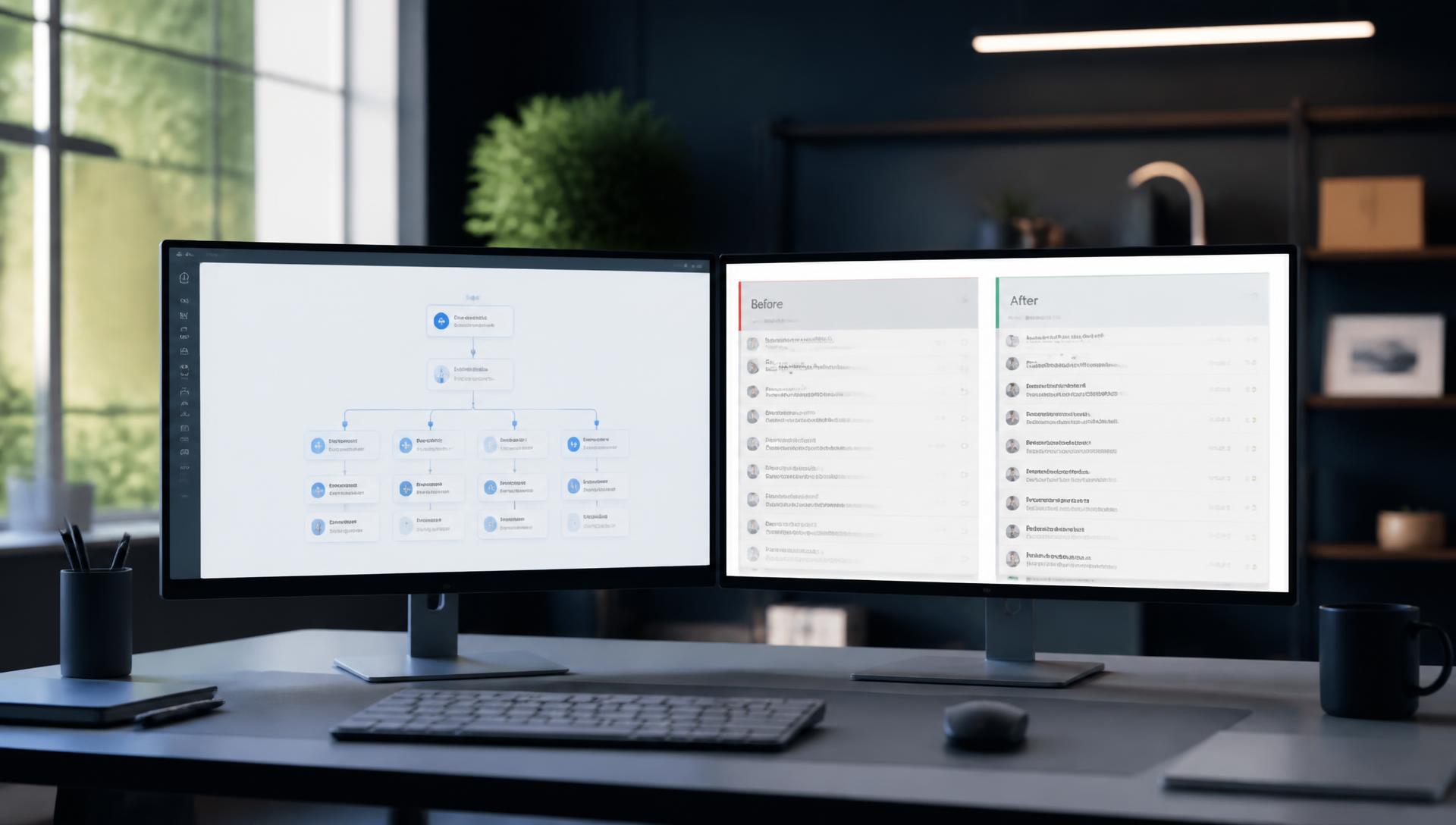
How one service team cut lead triage time by 68%, doubled the share of conversations reaching proposal stage, and stopped checking the inbox every hour.
A practical look at how one team stopped drowning in unqualified enquiries and started only talking to people ready to buy.
Quick Answer
This team reduced time spent on unqualified leads by 68%, more than doubled the share of conversations that reached proposal stage (22% to 51%), and freed the founder from daily inbox triage. The key was not a complicated AI system. It was a clear qualification checklist turned into a short, structured conversation that ran automatically before any human got involved.
Most service businesses still run their lead inbox the same way they did five years ago: every WhatsApp message, Instagram DM, website form and email lands in one place. Someone — usually a founder or a salesperson — opens each one, works out whether it is serious, and replies.
It feels responsible. It is also one of the fastest ways to waste time, miss good leads and burn out.
This case study shows how one mid-sized service team moved from that manual chaos to a simple AI qualification flow: what they measured, what almost went wrong, and the concrete results after 60 days. Numbers are from the client's own tracking sheet, shared with permission and reported without the company name.
The starting point: a manual lead inbox
The team received leads from four main sources:
- Website contact form
- WhatsApp Business
- Instagram DMs
- Occasional email enquiries
Everything landed in one shared inbox. On busy days that meant 25 to 40 new conversations. Most were tyre-kickers, students, or people who were "just exploring options." Only a small share had budget, timeline and a clear need.
The founder was spending 1.5 to 2 hours every day reading, sorting and giving basic replies. Good leads sometimes waited hours. Average response time to serious enquiries was slipping, and nobody could say with confidence which channel actually produced revenue.
They had already tried the obvious fix: hire a junior person to manage the inbox. It helped for a few weeks. Then reply quality dropped, a few genuinely good enquiries were closed too early, and the founder was back to checking everything anyway.
The real cost was not the hours. It was attention. Every unqualified message pulled a senior person out of delivery work and into low-value triage.
The decision: qualify before you talk
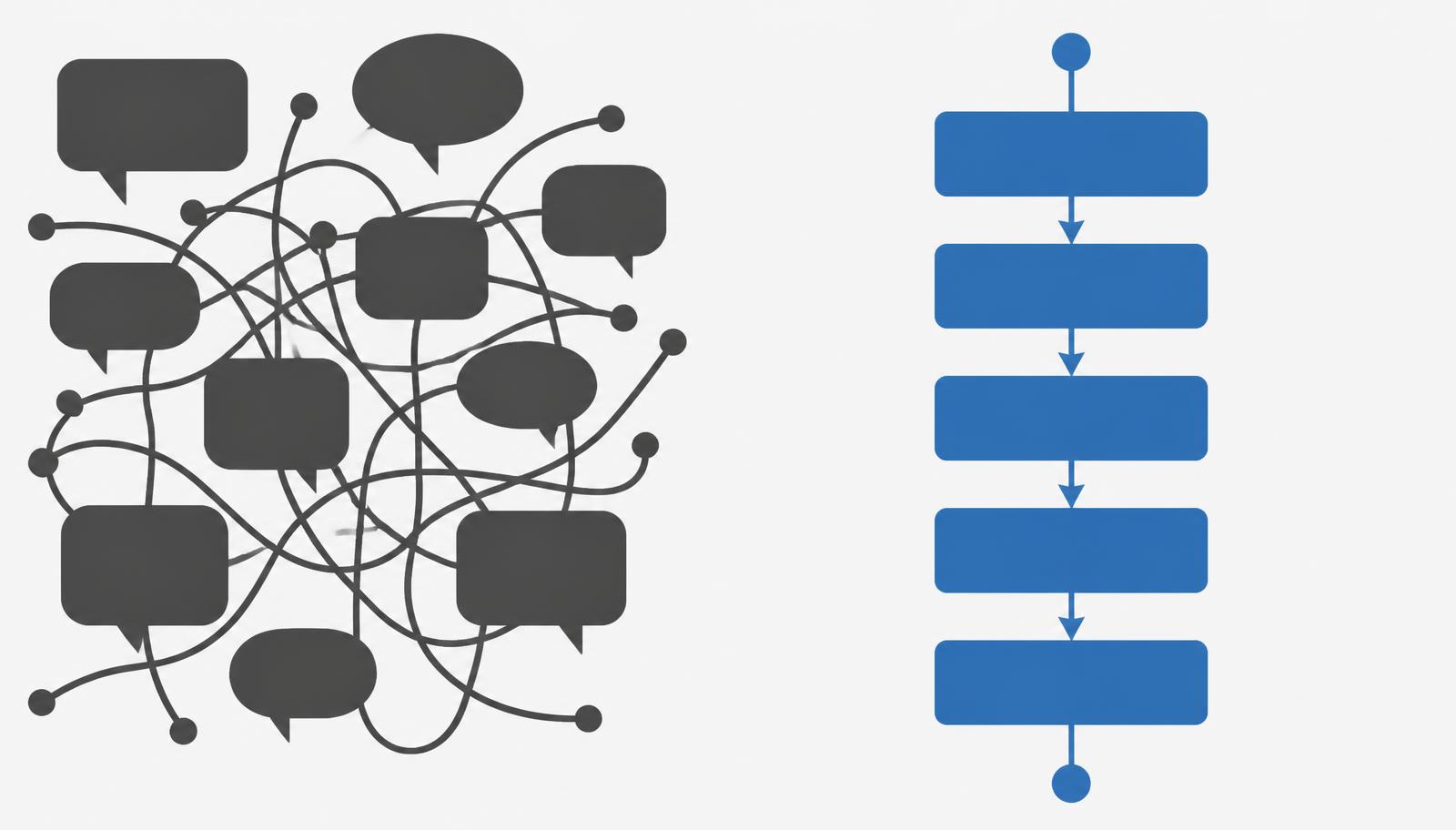
Instead of trying to reply faster to everyone, they decided to stop talking to unqualified leads altogether.
The goal was deliberately narrow:
- Automatically ask the same qualifying questions a good salesperson would ask.
- Tag the lead based on the answers.
- Only notify the human team when a lead met the minimum criteria.
- Give every lead a polite, useful response so nobody felt ignored.
They kept the first version small on purpose. No complex CRM integration. No long decision trees. No attempt to have AI "close" anything. Just a clean qualification conversation that ran the same way every time, at any hour.
That restraint mattered. Most automation projects fail because the first version tries to replace judgement. This one only tried to replace repetition.
How the AI qualification flow worked
When a new lead arrived from any channel, the system triggered a short sequence:
- A polite acknowledgement plus one question about their main goal.
- Follow-up questions on timeline and approximate budget range.
- One question about the decision-making process — who else is involved.
- Based on the answers, the lead was tagged: Ready now, Future interest, or Not a fit.
Only "Ready now" leads created a notification for the team, with a short summary of the answers. Everyone else received a helpful resource or a polite close, and the conversation was archived under the right tag so it could be revisited later.
The tone stayed human. No robotic scripts, no interrogation. The questions were the same ones the founder had always asked manually — just asked consistently, immediately, and without anyone having to be awake.
Total build: one channel first (WhatsApp), then the website form, then Instagram. The whole rollout took under three weeks, and most of that was writing and rewriting the questions, not building anything technical.
Results after 60 days
- Time spent on initial lead triage dropped from roughly 10 hours per week to under 3 — a 68% reduction.
- The share of human conversations that reached a serious proposal stage rose from 22% to 51%.
- Average response time to qualified leads fell from several hours to under 12 minutes.
- The founder stopped checking the inbox every hour.
- For the first time, they could see clearly which lead sources produced ready-to-buy enquiries — and which produced noise.
Worth stating plainly: the system did not create more leads. Total enquiry volume was flat. It made the existing leads usable, which turned out to be the more valuable problem to solve.
What almost went wrong
Three things nearly cancelled out the gains.
1. Asking too many questions, too early
The first version had six questions. Response rates dropped noticeably in week one — people simply stopped replying halfway. Cutting it to four essential questions restored completion rates within days.
2. Being too rigid about budget
Some genuinely good leads were hesitant to share numbers with an automated conversation. Changing the budget question to broad ranges, plus a "prefer to discuss" option, kept qualification quality high while stopping good leads from dropping out.
3. Forgetting the human hand-off
Early on, qualified leads triggered a notification but the context was not summarised. The team lost minutes re-reading conversations before every call, which quietly ate part of the time saved. A clean summary card — goal, timeline, budget range, decision maker — fixed it.
None of these were technology problems. All three were design decisions that only surfaced once real people started replying.
Key lessons
- Qualification works best when it copies what your best salesperson already does manually. If you cannot write the questions down, do not automate them.
- Shorter is better. Every extra question costs replies.
- The biggest win is usually not "more leads" — it is protecting the team's attention.
- You do not need a perfect AI system. You need a consistent filter that runs before humans get involved.
- Measuring the percentage of conversations that become real opportunities is far more useful than measuring total lead volume.
- Every unqualified lead should still get a courteous reply. Reputation is part of the return.
When this approach makes sense
This style of AI qualification flow is worth testing if:
- You receive more than 15 to 20 new enquiries per week.
- A significant share of them are unqualified.
- Someone senior is still doing daily triage.
- You can define three to five clear qualifying criteria.
It is less useful if your volume is very low, if your average deal is large enough that every enquiry deserves a human from the first message, or if your qualifying criteria genuinely change with each project. In those cases a better first step is a simple intake form and a response-time commitment — not automation.
Practical next steps and checklist
- Write down the exact questions your best salesperson asks to qualify a lead.
- Decide the minimum set of answers that means "this is worth a human conversation."
- Map your current lead sources and how each one enters your inbox.
- Build the shortest possible version of the flow — start with one channel if needed.
- Run it for 14 days while tracking three numbers: hours spent on triage, percentage of leads reaching proposal, and response time to qualified leads.
- Review real replies and tighten the questions. Cut anything that loses people.
- Add a summary card for the human hand-off before you scale to more channels.
At CoodeLoom we design and build focused AI qualification systems for service businesses that receive leads across WhatsApp, website and social channels. The goal is always the same: protect the team's time and make sure the right conversations happen quickly.
If your lead inbox feels like a daily burden rather than a source of opportunity, the practical starting point is a clear qualification checklist and a simple automated flow that enforces it.
Explore related work in our portfolio or see how our AI software solutions work. When you are ready, book a free 20-minute call.
FAQ
Will AI qualification make my business feel impersonal?
Only if you let it. The flow in this case study used the founder's own wording and asked four short questions. Leads received a faster, clearer reply than before — most people prefer a useful answer in two minutes over a personal one in six hours.
How many questions should the qualification flow ask?
Three to five. Six was too many in this rollout and reply rates fell. Ask only what changes your decision to take the call.
What if the AI wrongly disqualifies a good lead?
Build for a soft no, not a hard one. Leads tagged "Future interest" or "Not a fit" still get a courteous reply and stay in the archive, and a human reviews those tags weekly for the first month.
How long does it take to set up?
This rollout took under three weeks across three channels, and most of that time went into writing and refining the questions rather than technical build.
What should I measure to know it is working?
Three numbers: hours spent on triage, the percentage of human conversations that reach proposal stage, and response time to qualified leads. Total lead volume is the least useful metric here.
Related articles
Choose Your Reading Experience
Whether you prefer an immersive online experience or a professionally designed executive summary, we’ve made both available.
Read Online
Experience the complete interactive article with animations, architecture diagrams, comparison tables, live charts, calculators, expandable sections, and rich visual storytelling.
- Interactive Charts
- Architecture Diagrams
- Performance Visuals
- ROI Calculator
- Animated Stats
- Sticky Navigation
- Related Articles
- Search Optimized
Executive PDF
Download a beautifully designed executive report optimized for business leaders, client presentations, management meetings, and offline reading.
- Executive Summary
- Key Insights
- Business Recommendations
- Professional Charts
- Architecture Diagrams
- Comparison Tables
- Checklists
- Action Plan
- References
- Printable A4 Layout
Approx. 2–4 MB · Print-ready A4
Still prefer reading online?
Continue exploring the complete interactive experience with diagrams, calculators, FAQs, and additional resources.

Written by
Kamaluddin Siddique
Founder & CEO, CoodeLoom
Helping businesses grow through technology, AI, automation, software development, and digital transformation.